What is the MAGIC Lab?
The MAGIC Lab takes an exciting interdisciplinary approach to exploring human behaviour and cognition. Our research goes beyond the realm of traditional psychology, using magic as a unique tool to investigate a broad spectrum of questions, from consciousness, attention, and perception to deception, free will, and magical beliefs. We believe in bridging the gap between the real-world expertise of magicians and the scientific fields of psychology, neuroscience, computer science, and more.
Our methods are just as diverse as our research questions, incorporating behavioural and neurophysiological measures, eye-tracking technology, and natural observation to study human behaviour in both laboratory and real-world settings. We encourage collaboration across disciplines, offering fresh perspectives that push the boundaries of understanding how the mind works!
New Scientist (2025, April 10). The MAGIC lab uses cognitive psychology to better understand perception and free will [Video]. YouTube. https://www.youtube.com/watch?v=RjjA8En-gFk
 |  |  |
|---|---|---|
 |  |  |
 |  |
Facilities
Eye Tracking
Our lab is equipped with cutting-edge eye trackers, including the Pupil Lab and Eyelink 1000, which enable us to accurately measure where people are looking and monitor various oculomotor functions like pupil dilation. These tools are central to our research on attention and are particularly effective in our studies on misdirection, helping us unlock the secrets behind how people see (or don’t see) during magic tricks.
Virtual Reality
With access to an array of VR devices and cameras, we are able to immerse participants in virtual environments that replicate real-world settings. Currently, we are using VR to explore how people experience magic in a virtual space, pushing the boundaries of how we understand perception and illusion in digital worlds.
Lab-Based Studies
A significant portion of our research involves presenting participants with stimuli in controlled lab settings. With multiple experimental laboratories, we can create precise environments for studying cognition, attention, and perception in response to various types of stimuli.
Cyber-SHIP Lab
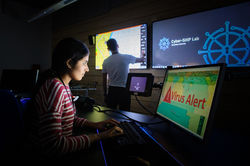
Mentalists hack into minds using psychological tricks, while cyber hackers do the same with computers, manipulating devices and extracting information. The Cyber-SHIP Lab is a one-of-a-kind, hardware-based maritime cyber security platform, where we explore the fascinating overlaps between magic and cyber piracy, using cutting-edge tools and techniques borrowed from both worlds.
Robotics
Arthur C. Clarke once said, "Any sufficiently advanced technology is indistinguishable from magic." In line with this, we are investigating how magic can reshape beliefs in AI and robotics. By programming robots to perform magic tricks, we explore how technology can evoke wonder and challenge perceptions of artificial intelligence.
Neuroimaging
We have access to a variety of advanced neuroimaging technologies, including EEG and fMRI, that allow us to delve deep into the brain's inner workings. These tools offer unique insights into the neurological processes behind magic and misdirection, helping us understand how the brain responds to illusions, sleights of hand, and moments of surprise. By studying these processes, we can uncover the cognitive and neural mechanisms that make magic so captivating.